Blog
Bring Your Own LLM (BYOLLM): The Complete Guide for AI Agents
What BYOLLM means
Bring Your Own LLM (BYOLLM) — sometimes called Bring Your Own Model or Bring Your Own Key — is the ability to plug your own large language model into a platform, instead of being locked into whatever model the vendor picks for you.
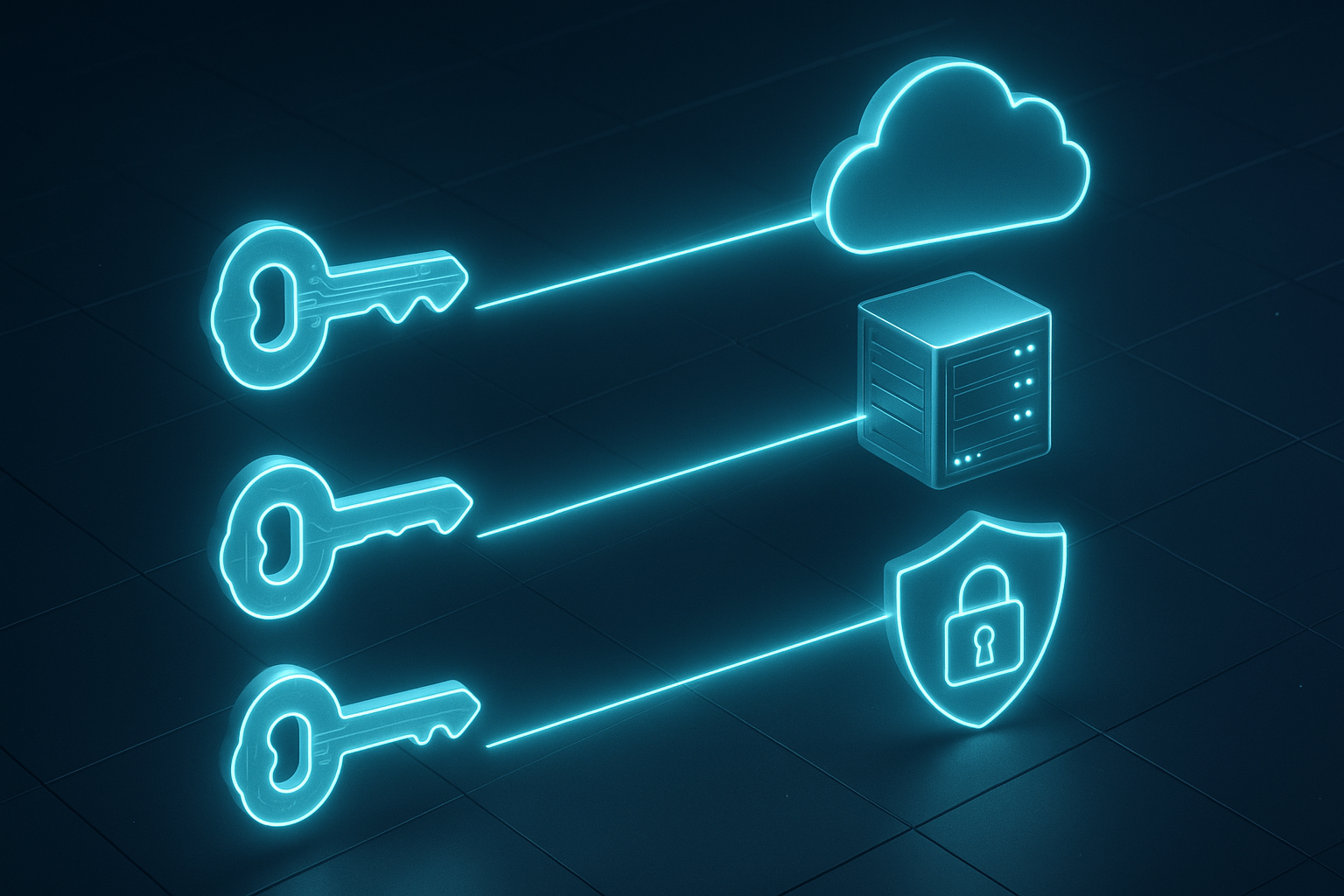
In practice, BYOLLM means one of three things:
- You paste your own OpenAI or Anthropic API key, and the platform routes your requests through your account.
- You point the platform at a self-hosted model running inside your own cloud (AWS, Azure, GCP, or on-prem).
- You attach a private third-party endpoint — for example, a legally signed Azure OpenAI deployment or an enterprise Anthropic contract.
Why enterprise buyers now insist on BYOLLM
Three years ago, no one asked about BYOLLM. In 2026 it is a standard RFP line item. Four forces made that flip:
- Data locality — regulated industries (banks, insurers, health, government) legally cannot let sensitive data flow to a third party's inference endpoint. BYOLLM keeps the data inside their perimeter.
- Cost control — at enterprise volume, marking up inference by 2× (a typical vendor default) burns real money. BYOLLM caps the price at what you pay the model provider directly.
- Model choice — one team wants Claude for reasoning, another wants GPT for structured output, a third wants Llama for cost. BYOLLM lets each workload pick the right model.
- Governance — with your own key, all usage flows through your existing compliance stack (audit logs, DLP, red-team monitors).
BYOLLM vs BYOK vs BYOM — the term soup
The industry uses three overlapping terms:
- BYOLLM (Bring Your Own LLM) — the broadest term. Any arrangement where you supply the language model instead of using the vendor's default.
- BYOK (Bring Your Own Key) — a lighter form. You supply your API key for a hosted model (OpenAI, Anthropic). The vendor still routes through the same provider — just billed to you.
- BYOM (Bring Your Own Model) — usually implies self-hosted. You run the model on your infrastructure and the platform calls it there.
In casual conversation these get used interchangeably. In an RFP, read the definitions carefully — they carry very different security implications.
What BYOLLM actually gives you (and what it does not)
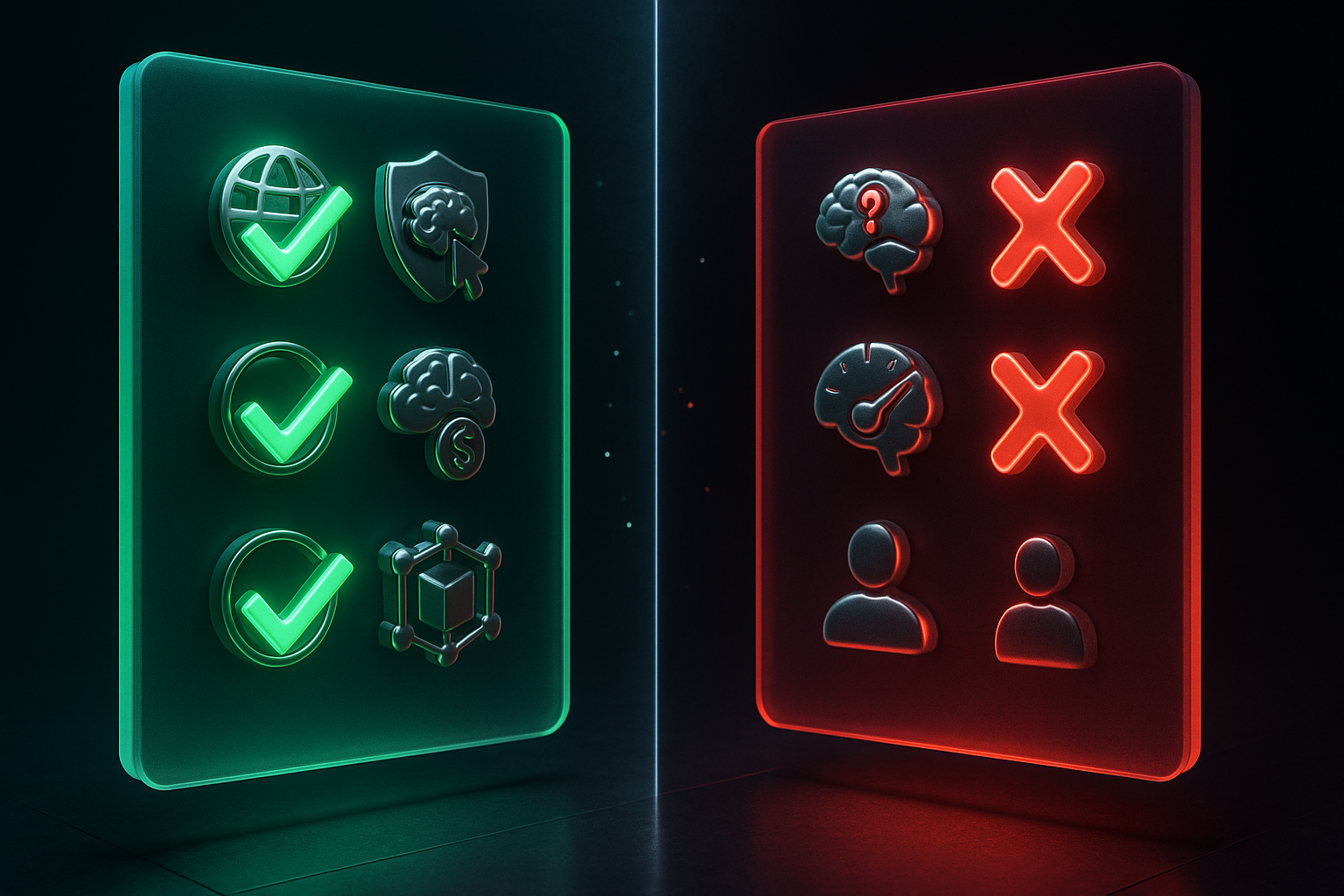
BYOLLM controls:
- Where the model runs.
- Which model runs.
- Who is billed for inference.
- What data leaves your perimeter.
BYOLLM does not control:
- What the model was trained on.
- How well it reasons — a small self-hosted model will still be worse at hard tasks than a frontier model, BYOLLM does not close that gap.
- Employee shadow-AI use — as Complete Discovery Source's legal analysis put it in 2026, BYOLLM "fundamentally changes the data risk environment, and without strong governance, employees can unknowingly expose sensitive information in ways that are challenging or even impossible to reverse." BYOLLM is a routing choice, not a governance layer — you still need approvals, audit, and DLP.
When BYOLLM is worth the setup, and when it is not
Turn on BYOLLM when:
- You are in a regulated industry and data locality is non-negotiable.
- Your inference bill would exceed the platform's default markup — usually above a few thousand dollars a month.
- You already have a model contract (Azure OpenAI, Anthropic Enterprise) that you want to consolidate onto.
- You need a specific model for a specific workload.
Stick with the default when:
- You are just starting out — the setup overhead is not worth it.
- You want the platform to automatically pick the best model per task.
- Your volume is low enough that the markup is negligible.
How BYOLLM works on MANAV
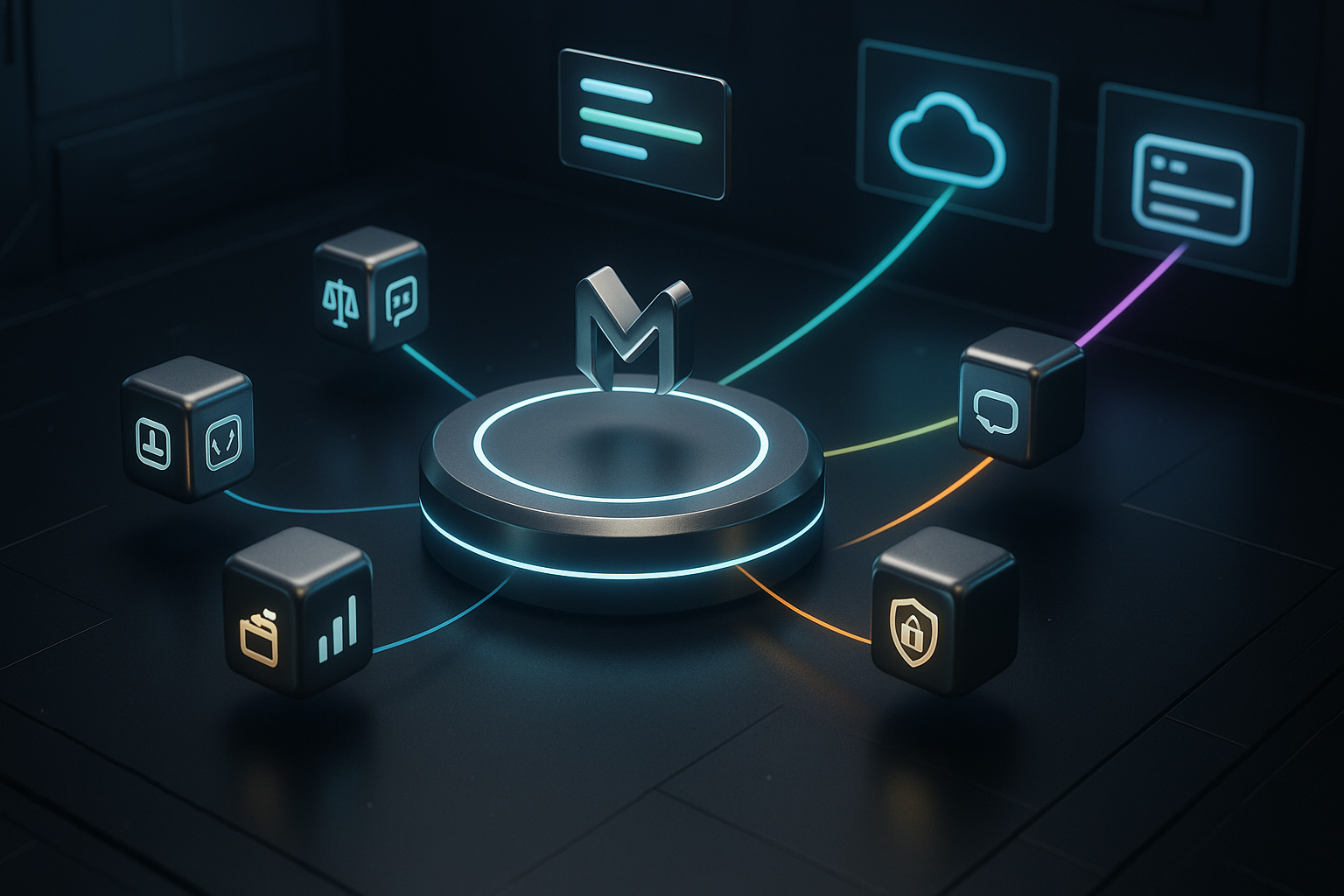
On the MANAV platform, BYOLLM is a workspace-level setting. You add your model — an API key, a self-hosted endpoint, or an enterprise contract — and every agent in that workspace uses it automatically.
Agents can also be pinned to a specific model when the task calls for it (a legal reviewer on Claude, a code generator on GPT, an internal Q&A agent on your own Llama). Cost, latency, and success rate are tracked per model so you can see whether the switch actually paid off.
BYOLLM is now the industry standard for enterprise agent platforms. Warp routes eligible requests through models hosted in your own cloud account so teams keep model + data locality control; Workato's Agent Studio supports BYOLLM so you power agents with your own OpenAI or Anthropic credentials. MANAV follows the same pattern — plus every action running through your own model is still governed by the same approval + audit trail as any other.
See pricing for how BYOLLM changes the plan billing, or read our FAQ for the security review questions we hear most often.
BYOLLM — FAQ
Does BYOLLM cost extra? On MANAV, the platform fee stays the same. You just pay your model provider directly instead of paying MANAV a marked-up rate.
Can I use different models for different agents? Yes. That is one of the most common BYOLLM patterns — a frontier model for hard reasoning tasks, a cheaper model for high-volume routine work.
Is my data more secure with BYOLLM? It depends. If you route to your own self-hosted model, yes. If you route to your own OpenAI or Anthropic key, the data still leaves your perimeter — you have just changed who is billed.
Do I need BYOLLM to use MANAV? No — the default configuration works out of the box. BYOLLM is for teams with specific regulatory, cost, or model-choice needs.
You may also like
AI Audit Trail: How to Audit Your AI Agents (2026 Compliance Guide)
An AI audit trail is the tamper-evident record of what your AI agent did, when, and why. With the EU AI Act's enforcement window opening August 2, 2026, and 88% of enterprises reporting AI agent security incidents in the last year, an audit-ready agent is no longer optional. Here's what the audit trail actually needs to capture, how to build one that survives an auditor's questions, and why retrofitted audit trails always cost more than the ones you build on day one.
AI Red Lines: What the UN Actually Asked For (and What Your Team Should Do)
On September 7, 2026, UN rights chief Volker Türk asked the world to agree on "AI red lines" — actions AI should never be permitted to take without a human. The signal in that statement is not "slow AI down." It is "decide which actions require a human, then enforce it." Here is what red lines mean, why they matter, and how your team draws them this week.
AI Agent Evaluation: The Framework Every Team Should Adopt in 2026
An AI agent evaluation framework is how you know your agent is any good — before you ship it, and while it runs in production. This guide covers the three-level eval stack (unit tests, LLM-as-judge, online evals), the metrics that actually matter for agents (versus one-shot LLMs), and how to design rubrics that stabilize at 85%+ human agreement in three iterations.