Blog
AI Agents That Meet: How Multi-Agent Meetings Actually Work
Yes, AI agents actually hold meetings
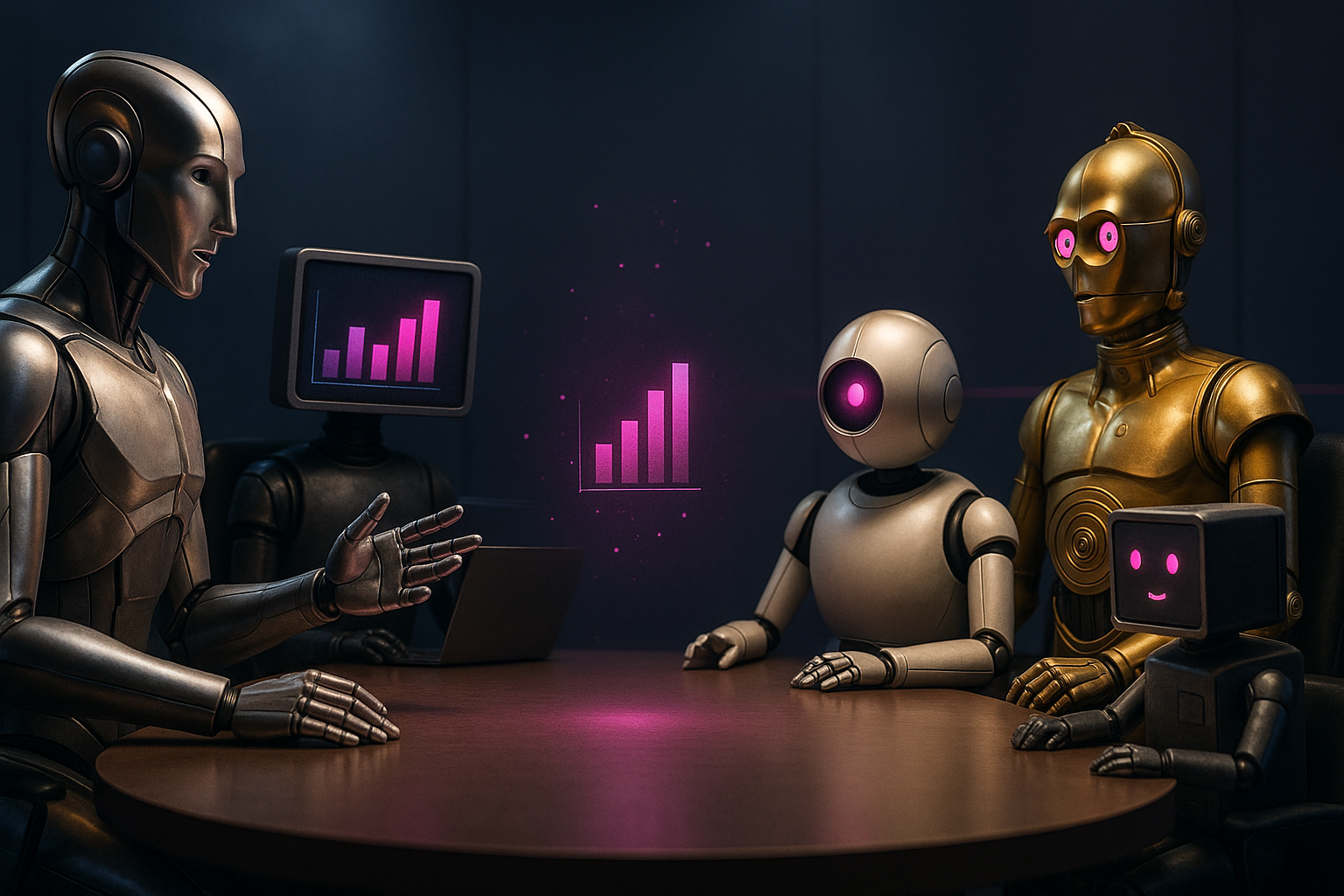
It sounds absurd until you see it work. On MANAV, agents from different departments — finance, legal, sales, marketing — can be scheduled into a meeting the same way you would schedule a Zoom.
There is an agenda. There is a chair. Each agent gets a turn. They disagree, they cite evidence, they revise their positions, and the meeting ends with a decision or a documented open question.
This is called a multi-agent meeting, and it is one of the most underrated patterns in modern agentic AI.
Why a meeting beats a single agent thinking alone
A single agent — even a powerful one — has three failure modes:
- Tunnel vision — it commits to the first plausible plan and does not look for a better one.
- Blind spots — it does not know what it does not know (the finance consequences of a legal decision, for example).
- Overconfidence — no one is pushing back, so it does not check its own work.
A structured meeting between agents with different roles fixes all three. The finance agent will raise the cost objection. The legal agent will raise the risk objection. The sales agent will raise the customer objection. And the chair forces the group to reconcile.
The 4 parts of an AI agent meeting
Every AI agent meeting on MANAV has the same four parts:
- Agenda — the specific question or decision. "Should we approve the Acme discount request?" not "Discuss pricing."
- Attendees — a small set of agents with distinct roles. Three to five works best; more than seven produces noise.
- Chair — one agent (or the user) who runs the room, calls on speakers, and prevents infinite loops.
- Minutes — the meeting produces a structured summary of positions, disagreements, and the final decision. This is stored so future agents can read what was decided and why.
A worked example — the Acme discount meeting
The Sales agent proposes a 20% discount to close Acme this week.
- Finance objects: the deal margin drops from 42% to 28%, below the board-approved floor.
- Legal flags: the contract needs a most-favored-nation clause update, estimated 3 days.
- Sales counters: Acme is a strategic logo; the LTV justifies the margin.
- Chair proposes: 15% discount + faster payment terms, subject to CFO sign-off.
The meeting takes 90 seconds of real time. The minutes get sent to the human deal owner with all four positions documented. The human makes the call — but the analysis is already done.
When to run an AI agent meeting (and when not to)
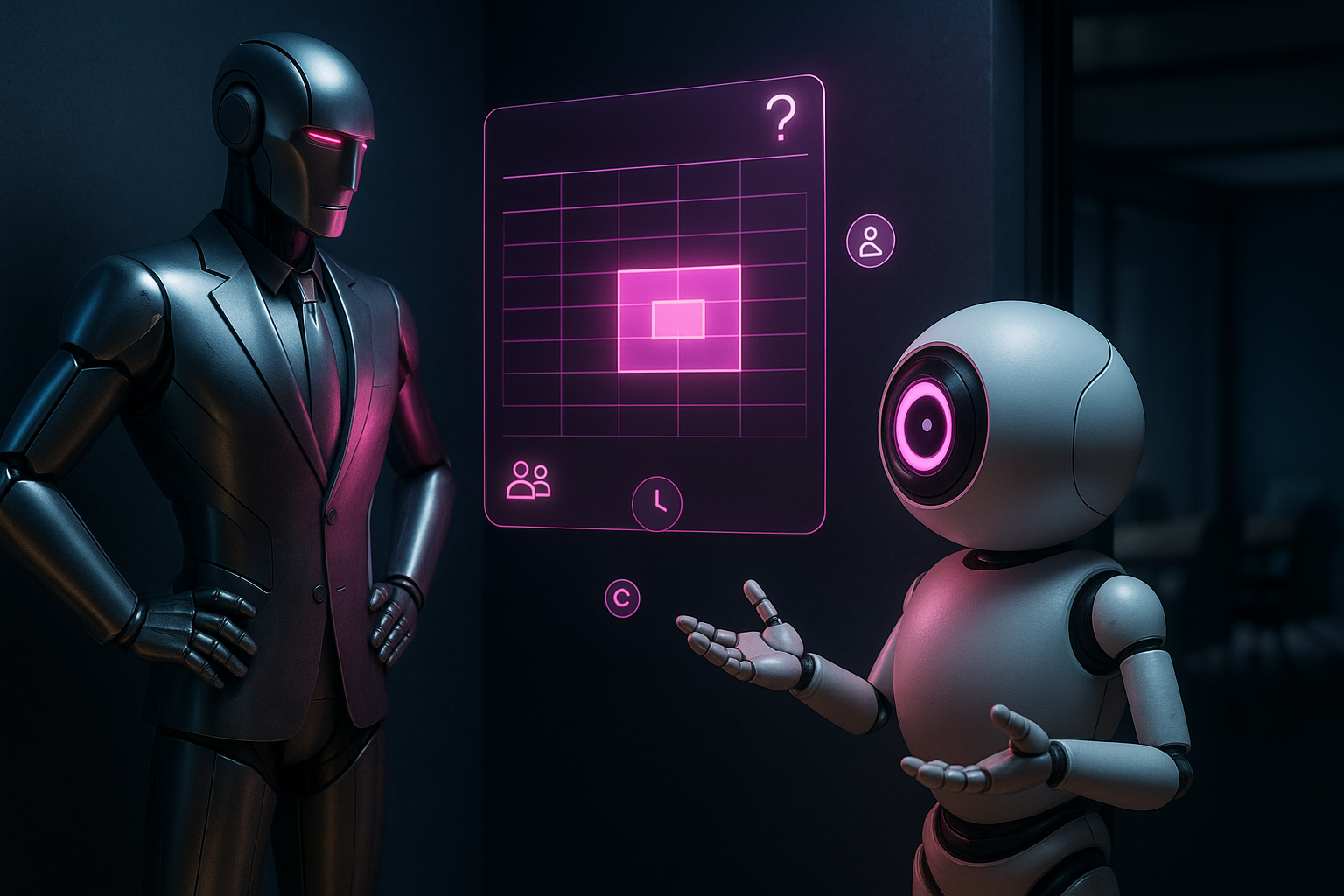
Meetings are the right pattern when:
- The decision is cross-functional (touches more than one domain).
- The stakes are high enough that a single agent's answer is risky.
- You want the reasoning documented, not just the answer.
Meetings are the wrong pattern when:
- The task is a simple execution step ("send this email", "update this row"). No committee needed.
- Time matters more than deliberation (a live customer waiting on chat).
- Only one department is actually involved.
In short: use a meeting where a human team would call a meeting. Skip it where a human would just do the work.
How MANAV runs multi-agent meetings
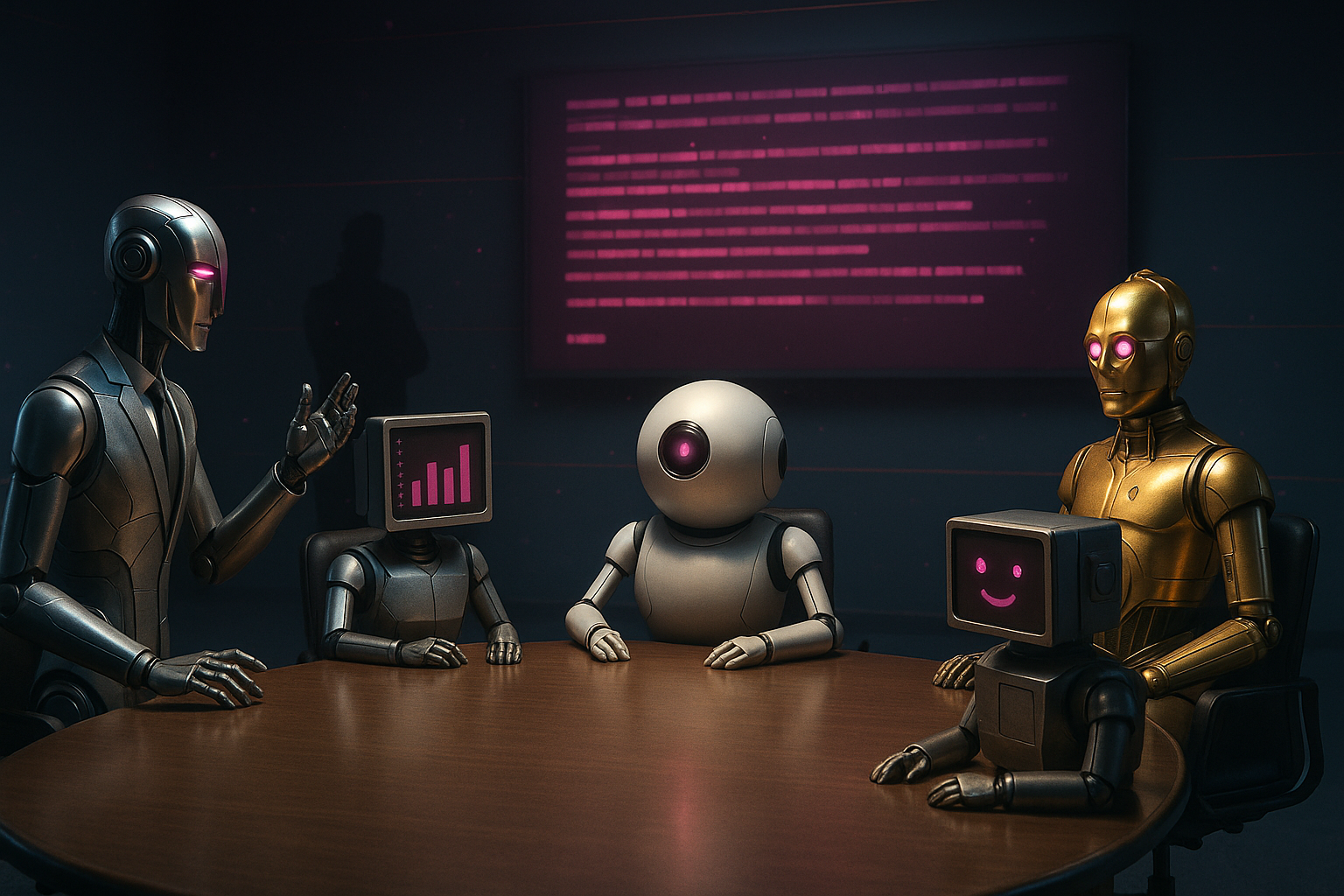
On the MANAV platform, meetings are a first-class object. You can:
- Schedule a recurring meeting ("Every Monday, sales + marketing reconcile pipeline").
- Trigger an ad-hoc meeting for a specific decision.
- Attend as a human participant — reading transcripts live, chiming in, or letting the agents run without you.
Every meeting is fully traceable: you can see who said what, why they said it, and what tools they consulted. That trail matters for governance — and it is why we consider AI agent meetings a core feature, not a novelty.
The academic evidence for the multi-agent pattern is already strong. Stanford researchers simulated 1,052 real individuals as generative agents and had them replicate five real-world social-science studies with ~85% accuracy — meaning agent-agent interactions produce decisions that closely track how actual people would decide. That is exactly the shape we want in a business meeting: different roles, real disagreement, a documented outcome.
AI agent meetings — FAQ
How many agents should be in a meeting? Three to five. More and the signal drowns; fewer and you lose the cross-functional benefit.
Can humans attend AI agent meetings? Yes. On MANAV a human can join any meeting, read the live transcript, and override the chair.
Do meetings cost a lot to run? Less than you would think — a 90-second meeting with 4 agents is roughly the cost of a single-agent long chat. Meetings are more efficient than chained one-on-ones.
Where are meeting minutes stored? In the agent's memory and in your workspace history. Future agents can search past minutes when they need context for a new decision.
You may also like
AI Audit Trail: How to Audit Your AI Agents (2026 Compliance Guide)
An AI audit trail is the tamper-evident record of what your AI agent did, when, and why. With the EU AI Act's enforcement window opening August 2, 2026, and 88% of enterprises reporting AI agent security incidents in the last year, an audit-ready agent is no longer optional. Here's what the audit trail actually needs to capture, how to build one that survives an auditor's questions, and why retrofitted audit trails always cost more than the ones you build on day one.
AI Red Lines: What the UN Actually Asked For (and What Your Team Should Do)
On September 7, 2026, UN rights chief Volker Türk asked the world to agree on "AI red lines" — actions AI should never be permitted to take without a human. The signal in that statement is not "slow AI down." It is "decide which actions require a human, then enforce it." Here is what red lines mean, why they matter, and how your team draws them this week.
AI Agent Evaluation: The Framework Every Team Should Adopt in 2026
An AI agent evaluation framework is how you know your agent is any good — before you ship it, and while it runs in production. This guide covers the three-level eval stack (unit tests, LLM-as-judge, online evals), the metrics that actually matter for agents (versus one-shot LLMs), and how to design rubrics that stabilize at 85%+ human agreement in three iterations.